Codes.IQ vs. Up.Codes: Why the Future of Building Code Compliance Is Context-Aware AI
- Nov 26, 2025
- 5 min read

In the AEC world — architects, designers, builders, and contractors — code compliance is a perpetual cross-check. Hundreds of thousands of pages of zoning, building, fire, accessibility, energy, plumbing, mechanical regulations. Historically this has meant manual research through code books, PDF downloads, jurisdiction portals — or at best a searchable library like UpCodes. But now that standard is shifting. Enter Codes.IQ, the next-gen, AI-driven code intelligence system from InQI.
Here’s how Codes.IQ delivers real value — and why for you or your firm. Certainly you can go and read the books, or login to sites like ICC and up.codes where you will search or read online, only app in the market that is tied directly to your project and does code check is Codes.IQ
Code Compliance Has Become Too Complex for Manual Processes
Every architecture, design, or construction project begins with the same hurdle: building codes. They govern everything — zoning, occupancy, fire safety, accessibility, energy use, structural systems, and countless local amendments. Historically, the workflow has been slow, repetitive, and error-prone:
Sifting through code books or PDFs
Searching systems such as UpCodes or similar tools for relevant sections
Manually interpreting requirements
Copying notes into drawings or project documents
Hoping no important amendment is missed
In today’s environment — where jurisdictions change rules constantly and projects are increasingly complex — this approach is no longer sufficient.
Now after you do all of your research and update your plans, you got to do it again with your updated plan, manually!
This is where Codes.IQ represents a generational leap forward.
What Is Codes.IQ? A New Paradigm in Code Intelligence
Codes.IQ, part of the InQI AEC Knowledge Hub, is not a search engine for building codes, or an AI that tells you the answer to your questions about the codes, it is a context-aware compliance engine powered by InQI's trained AEC AI models.
Codes.IQ: The Definition
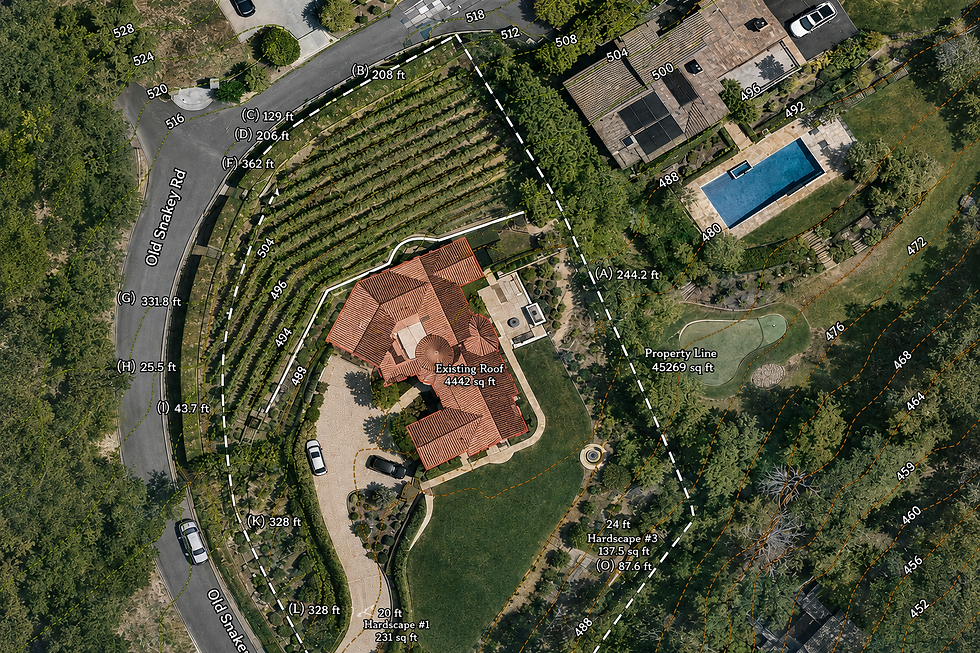
Codes.IQ takes your project address, drawings, jurisdiction, occupancy, site characteristics, and binder content and automatically:
Extracts key project attributes directly from your plans.
Applies the correct building, fire, zoning, accessibility, energy, mechanical, plumbing, and electrical codes to what it finds on your plans.
Flags issues within the context of your design and provides you references to change them
Suggests compliant alternatives as there could be many options
Links findings to both your drawings and your InQI project binder
Produces clean, inspector-ready compliance documentation so you are not hoping for the best before you submit your plans, you know its compliant.
This is fundamentally different from tools like UpCodes — which are excellent references but still rely on human interpretation and manual application, that was done in the 80s.
UpCodes, ICC Digital Codes, and Manual Research: Useful but Limited
Let’s compare the current options used by architects, designers, and builders:
Manual Research
Still the default for many firms.
Pros:
✔ Familiar
✔ Zero subscription cost
Cons: ✘ Extremely time-consuming ✘ Prone to oversight ✘ Hard to track local amendments ✘ No link back to design or cost ✘ No version control
UpCodes (and similar systems like ICC Digital Codes & MadCad)
Tools like UpCodes, ICC Digital Codes, and MadCad solve one big problem: search-ability. They provide centralized access to code books with good keyword search and helpful diagrams.
Pros:
✔ Fast code lookup
✔ Centralized code library
✔ Local amendment filters
✔ Good for quick references
Cons: ✘ Still a lookup tool, not intelligence ✘ Does not interpret drawings ✘ Does not apply codes to your specific project ✘ Does not integrate with cost/scope or construction workflows ✘ Output still requires manual interpretation and copying
In other words: UpCodes tells you what the code says. Codes.IQ tells you what the code means for your project.
Why Codes.IQ Outperforms UpCodes and Manual Research
1. Context-Aware Code Intelligence (The Game-Changer)
UpCodes answers a search query.Manual research answers a question after hours of digging.Codes.IQ answers based on your project’s actual conditions:
Lot size & setbacks
Occupancy classifications
Construction type
Fire separation distances
Egress paths & occupant loads
Pool, ADU, and accessory structure requirements
Environmental and energy regulations
Local city amendments and zoning overlays
Sheet-by-sheet code interpretation
No other tool does this. Not UpCodes. Not ICC. Not MadCad.
2. Integrated With Your Drawings and Binder System
This is where Codes.IQ becomes unbeatable.
Codes are not simply referenced — they are linked to your:
Plans
Elevations
Sections
Project notes
Binder documents
Site scans (via InSight/ProjectCAM)
Meaning:
If you change your design, Codes.IQ instantly recalculates compliance.
If a code interpretation changes cost or scope, InQI updates downstream impacts.
If a contractor needs proof during construction, every code reference is attached to a drawing.
This produces unmatched traceability from design → compliance → construction.
3. Proactive Issue Detection (Instead of Reactive Searching)
Instead of searching “egress width” or “pool barrier requirements,” Codes.IQ simply tells you:
“Your egress corridor is 8” too narrow for calculated occupant load per CBC section ####.”
Or:
“Your pool barrier must be revised based on Santa Clara County amendments.”
No searching. No guessing. No missed deadlines.
This eliminates:
Permit office rejections
Time-consuming RFIs
Expensive late-stage redesigns
Builder confusion in the field
4. AI-First Deep Integration With Cost & Scope
No other code engine on the market connects compliance with cost intelligence.
Codes.IQ ties every code result into:
Material requirements
Labor impacts
Cost delta forecasts
Scope adjustments
Construction sequencing
This supports your strategic pillar: Cost & Scope Intelligence.
5. Supports Designers, Architects, Builders, and Inspectors
Most code tools target designers only.
Codes.IQ serves the entire lifecycle:
Designers
✔ Early compliance → better, faster concept work ✔ Automatic code summaries for every sheet
Architects
✔ Jurisdiction-linked analysis ✔ Project-specific code matrix ✔ Fewer RFIs and permit delays
Builders
✔ Inspector-ready reports ✔ Field-level code checks (via ProjectCAM) ✔ Installation validation (depths, spacing, distances)
Inspectors
✔ Clear traceability
✔ Photo/video evidence linked to code sections
It is the only code system built for the entire design-to-construction chain.
Comparison Table: Codes.IQ vs UpCodes vs Manual Research
Feature | Codes.IQ | UpCodes | Manual Research |
Context-aware (address + drawings) | ✔ | ✘ | ✘ |
Auto-applies code to drawings | ✔ | ✘ | ✘ |
Checks zoning + building + fire + energy | ✔ | Some | Depends |
Links to cost/scope intelligence | ✔ | ✘ | ✘ |
Inspector-ready outputs | ✔ | Partial | ✘ |
Learns your firm’s standards | ✔ | ✘ | ✘ |
Local amendment interpretation | ✔ | ✔ | Difficult |
AI-powered insights | ✔ | Partial | ✘ |
Requires manual copy/paste | ✘ | ✔ | ✔ |
How Codes.IQ Reduces Risk and Saves Money
Fewer RFIs
Catch mistakes in design, not in the field.
Faster Permits
Submit highly compliant plans with structured code sections.
Less Rework
Avoid expensive redesigns after construction has begun.
Higher Quality
Traceability and consistency across your entire team.
Competitive Advantage
Builders and designers using Codes.IQ look more professional, win more bids, and deliver more predictable results.
Conclusion: UpCodes Improved Search. Codes.IQ Reinvents Compliance.
UpCodes is an excellent research tool — the industry needed it.Manual research will always play a role.But neither is sufficient for the next decade of AEC.
Codes.IQ is the next evolution:
From search → to intelligence
From code text → to project context
From manual interpretation → to automated compliance
From isolated code checks → to integrated design-to-construction workflows
This is how modern AEC firms will work.