InQI vs. the AI Landscape: Why AEC Needs an Integrated Intelligence Platform, Not More Tools
- Dec 4, 2025
- 4 min read
Foundational LLMs, code search engines, and permitting tools each solve part of the problem — InQI is built to solve the whole workflow as an AEC Integrated Intelligence

The AEC Industry Is Experiencing an AI Surge — But Fragmentation Is Holding Firms Back
Over the last several years, the AEC industry has experienced its largest wave of digital innovation since the introduction of BIM.Foundational AI models such as those from OpenAI, Gemini, Claude, and others have accelerated that shift, enabling new classes of products across design support, code research, document summarization, permitting workflows, and more.
Tools like UpCodes, ICC digital resources, PermitFlow, Pulley, Symbium, and many others contribute meaningful value to specific parts of the lifecycle.
However, what’s become increasingly clear is this:
AEC firms do not suffer from a lack of tools — they suffer from a lack of integration.
The industry’s core challenges arise not from any single task, but from the fragmentation between tasks, documents, phases, and stakeholders.
This is where InQI takes a fundamentally different approach.
1. Foundational LLMs Are Powerful — But Not Sufficient on Their Own
Foundational AI models represent an extraordinary leap in general reasoning and language understanding. They support idea generation, interpretation of unstructured text, and high-level code analysis.
But general-purpose LLMs were not designed to:
interpret multi-sheet plan sets
understand jurisdiction-specific amendments
evaluate zoning envelopes
apply sequencing and dependencies across AEC phases
maintain persistent project memory
generate coordinated documentation
map design decisions to construction realities
They excel at conversation, not contextualized, code-aware, project-specific workflows.
InQI leverages foundational models — but layers on the AEC-specific intelligence, data structures, compliance logic, contextual memory, and workflow orchestration that general LLMs do not provide.
2. UpCodes & ICC: Excellent Code Access, Limited Project Awareness
Platforms like UpCodes and ICC Online are essential for navigating code text and amendments. They provide searchable access to rules and references — a meaningful improvement over manual reading of printed codebooks.
But code access is only one part of compliance.
These platforms do not:
analyze a project’s drawings
interpret dimensioned geometry
verify fire, egress, or accessibility requirements
identify conflicts between sheets
generate design corrections or compliance narratives
integrate into design workflows
Access to code is valuable — but code access alone does not produce compliant drawings.
Codes.IQ builds on top of the generation capabilities of foundational LLMs and combines them with InQI’s deeper project context to deliver actual compliance intelligence, not just code search.
3. PermitFlow, Pulley, Symbium: Focused Solutions for Permitting, Not Design and Compliance
Tools like PermitFlow, Pulley, and Symbium have advanced the permitting process by streamlining:
AHJ requirement lookup
form preparation
submission workflows
permit tracking
For many builders and developers, these platforms reduce administrative burden and help maintain visibility into the permitting lifecycle.
However, these tools operate downstream, after drawings and documentation have already been prepared.
They do not validate:
whether the design complies with code
whether the documentation set meets jurisdictional standards
whether the geometry, assemblies, or details require modification
whether earlier design decisions will create challenges in permitting
This means permitting solutions still depend on upstream accuracy — something InQI is uniquely positioned to improve.
4. The Missing Infrastructure Layer: Context, Memory, and Workflow Intelligence
AEC workflows are inherently interconnected. A decision made during early site analysis can affect:
massing
structural strategies
cost implications
code compliance
energy performance
and ultimately, permitting outcomes
Traditional tools operate in isolation, without persistent awareness of:
project evolution
firm standards
jurisdictional requirements
past decisions
document changes
historical precedent
InQI solves this with the Binder System:
Project Binder
Unified repository of plans, documents, markups, analyses, site data, and design revisions.
Account Binder
Firm-specific standards, templates, detail libraries, proprietary knowledge, and QA/QC practices.
Public Binder
Curated jurisdictional rules, code amendments, permitting requirements, and reference data.
This creates a structured intelligence layer — allowing InQI to apply foundational LLM capabilities within a persistent, contextualized AEC framework.
5. Codes.IQ: From Code Access to Code-Driven Design Intelligence
Codes.IQ applies multi-model reasoning to:
interpret drawings
extract dimensions and assemblies
check zoning constraints
validate fire and life safety requirements
assess accessibility compliance
detect inconsistencies between sheets
generate required narratives and corrections
produce permitting-ready compliance documentation
This is not “AI answering a question” — this is AI evaluating a project.
Codes.IQ benefits from the richness of:
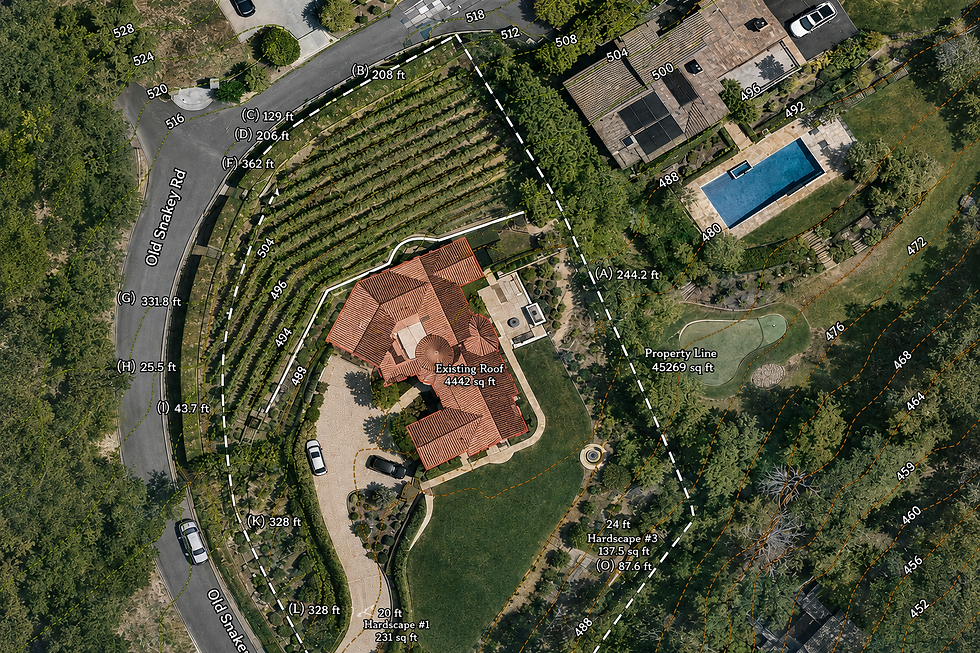
the address-based site pipeline
binder context
LLM-based reasoning
jurisdiction-aware rulesets
project history
The result is a compliance system that not only identifies issues but informs better design decisions, higher-quality documentation, and faster permitting outcomes.
6. InQI vs. the Broader Ecosystem: AEC Needs an Integrated Platform
Foundational LLMs
Provide reasoning and language capabilities — but no AEC structure, memory, or workflow awareness.
Code Platforms (UpCodes, ICC)
Provide searchable code — but no project interpretation or design integration.
Permitting Platforms (PermitFlow, Pulley)
Provide submission automation — but no upstream design or compliance intelligence.
InQI
Provides the entire chain, from the moment an address is entered through design, compliance, documentation, cost, and construction intelligence.
This is not a collection of tools — it is an AEC Intelligence Operating System.
7. Where the Industry Is Headed
As foundational LLMs continue to grow more capable, the differentiator in AEC will not be who uses AI, but how AI is structured within a domain-specific system.
The platforms that will define the next decade will be those that combine:
domain data
persistent context
multi-phase workflows
firm standards
compliance logic
design intelligence
construction feedback loops
This requires an operating system approach — not isolated applications.
InQI is built for that future.It is not an AI tool.It is the intelligence layer for the built environment.
Conclusion: The Industry Doesn’t Need More AI Features — It Needs Integrated Intelligence
Foundational LLMs like OpenAI, Gemini, and Claude bring extraordinary capabilities.UpCodes and ICC provide essential code access.PermitFlow and Pulley offer valuable permitting automation.
But each solves a single part of a much larger puzzle.
InQI solves the entire workflow — from property address to construction — by unifying design, compliance, documentation, and knowledge into one intelligent system.
This is what the AEC industry has been missing.This is why InQI exists.And this is why the future of AEC will be built on platforms that integrate intelligence across every phase — not tools that operate in isolation.