The Role of Knowledge & Information Management in AEC: Past, Present, and the AI-Driven Future
- Dec 8, 2025
- 3 min read

Knowledge and information management has always been the silent backbone of the Architecture, Engineering, and Construction (AEC) industry. From the early days of document management tools in the 1990s to today’s AI-powered workflows, the industry has cycled through waves of innovation—yet the foundational need remains the same: bringing the right information to the right decision-maker at the right moment.
What’s changed dramatically is the scale, speed, and complexity of that information. And in today’s AI era, AEC urgently needs a new class of platforms capable of organizing, contextualizing, and activating knowledge—not just storing it.This is where InQI and the emerging ecosystem of .IQ Apps represent a generational leap.
From Filing Cabinets to Digital Knowledge Stores: The First Wave (1990s–2000s)
The AEC industry has always been information-heavy. In the 1990s and early 2000s, the first major digital revolution arrived in the form of document management systems (DMS). Tools like Documentum, SharePoint, and early construction-specific platforms helped firms transition from physical plan rooms and binders to centralized digital storage.
This was a revolution in its own right. For the first time, teams could search, retrieve, and version critical drawings, RFIs, specs, and contracts without digging through boxes or emailing PDFs back and forth.AEC companies embraced the promise of knowledge management (KM)—an evolution of DMS that attempted not just to store files but to capture insights, standards, and institutional know-how.
But despite early progress, KM stalled.
Why Knowledge Management Faded in AEC
While generic industries moved forward with enterprise KM, AEC encountered a unique challenge:digitization tools focused on production, not knowledge.
Platforms like AutoCAD, Revit, SketchUp, Civil3D, GIS tools, and dozens more provided new ways to draw, model, render, and document. They created enormous volumes of data—but they did not connect that data back into a unified knowledge fabric.
AEC workflows became:
highly specialized
fragmented across dozens of tools
dependent on tribal knowledge
siloed within design teams, builders, engineers, and permitting agencies
By the 2010s, KM took a back seat. The industry digitized drawings, but not the intelligence behind them.
The New Era: AI Revives the Need for Knowledge Management
AI has unleashed a new reality:AEC finally has technology capable of understanding, interpreting, and generating knowledge from the massive volume of documents, drawings, imagery, and codes that define the built environment.
But AI is only as powerful as the context it receives.And this is where the industry faces a critical problem:
There is no modern, AI-native knowledge and information management platform built specifically for AEC.
AEC firms hold decades of accumulated plans, markups, standards, codes, reports, photos, and field intelligence—but until now, nothing has existed to structure, unify, and operationalize this knowledge.
AI has reopened the door that the 2000s closed:Knowledge Management is no longer a “nice-to-have.” It is mandatory infrastructure for the next generation of AEC.
InQI: AEC’s First Vertical Knowledge & Intelligence Platform
InQI was built from the ground up to solve this gap. Born out of real-world design-build experience at Bay Scenery, InQI recognizes that AEC workflows are fundamentally knowledge-driven, not just drawing-driven. Two years of development—paired with our patent-pending binder system—resulted in a platform that enables:
Structured knowledge (project, account, and public binders)
Context-awareness for AI through InQuest, our AEC-trained intelligence engine
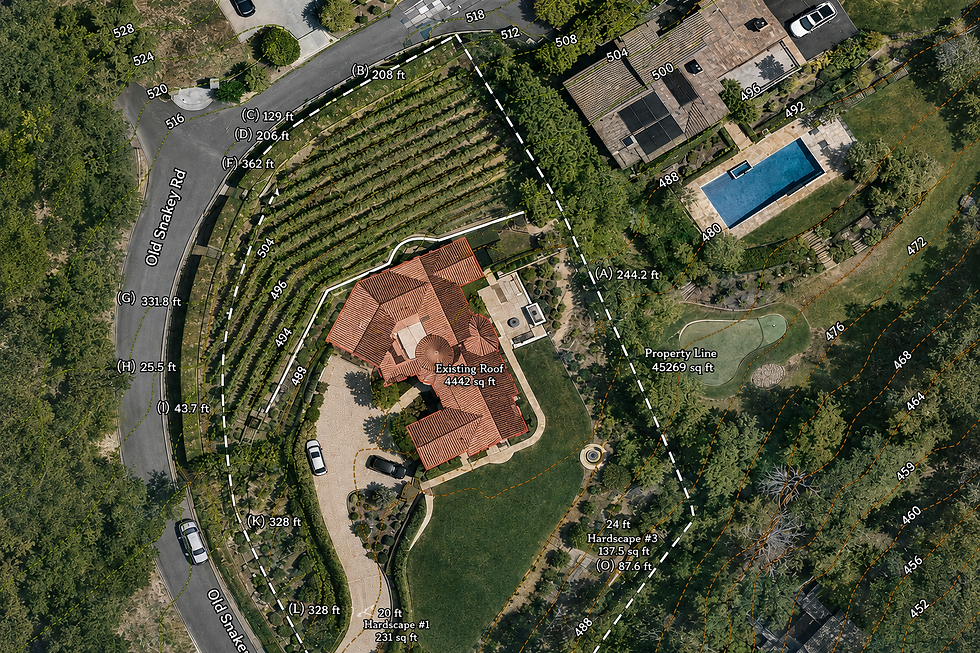
Dynamic, address-based site intelligence
A new class of domain-specific .IQ Apps like Codes.IQ
InQI restores what early KM promised—but with AI activation that makes the knowledge instantly usable in design, permitting, compliance, scope, and construction workflows.
The Rise of .IQ Apps: Knowledge Turned Into Action
Unlike the static KM tools of the past, .IQ Apps transform knowledge into specialized intelligence:
Codes.IQ automates code interpretation and compliance—far beyond keyword search tools like UpCodes.
Plant.IQ, Scope.IQ, Cost.IQ, and future modules extend AEC knowledge into hyper-specialized tasks.
ProjectCAM connects field data back into binders—closing the loop between design, site, and construction.
Each .IQ App becomes smarter as knowledge grows across binders and projects, creating a continuously improving intelligence network for the built world.
InQI isn’t just storing information.It’s building the operating system of AEC knowledge.